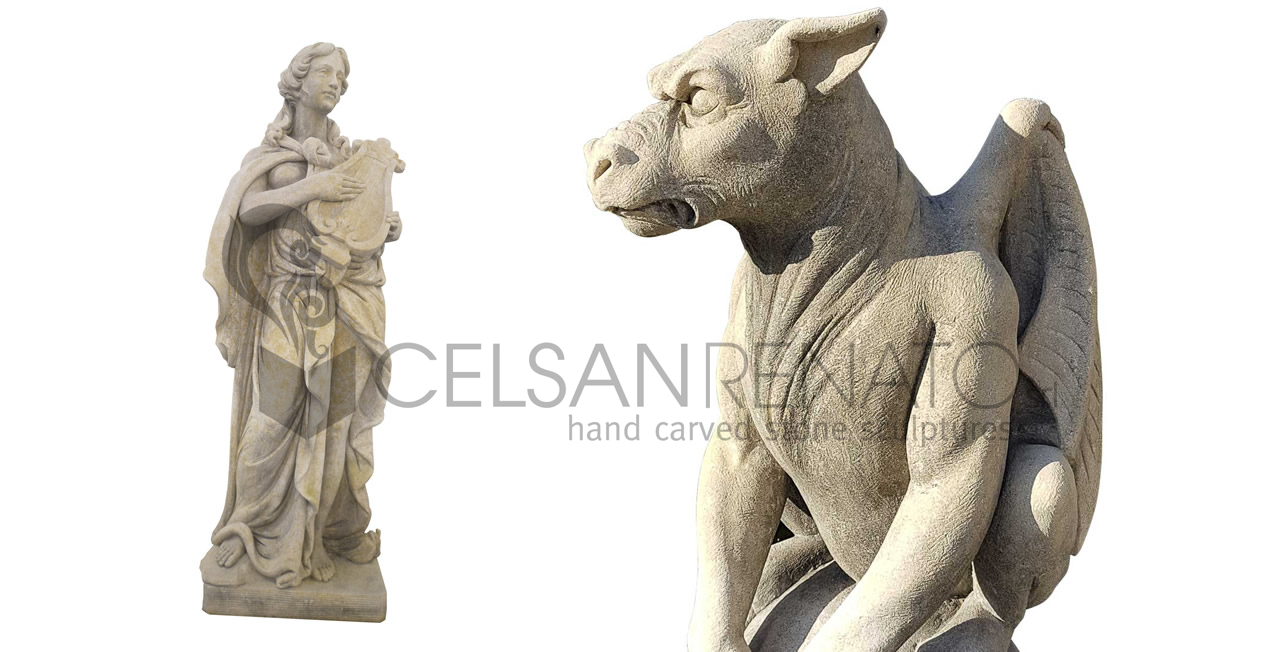


Man has always sought to shape the elements that surround him. There is something instinctive in the need to communicate with one’s peers through objects. Stone sculptures represent one of the highest forms of expression in artistic culture and, in a more modern context, have become ideal objects for the furnishing of outdoor environments.
First and foremost, it is important to remember the profound difference between stone sculptures and plaster sculptures. Stone sculptures are based on the carving technique, whereas plaster sculptures are created through modeling. The difference is easily understood.
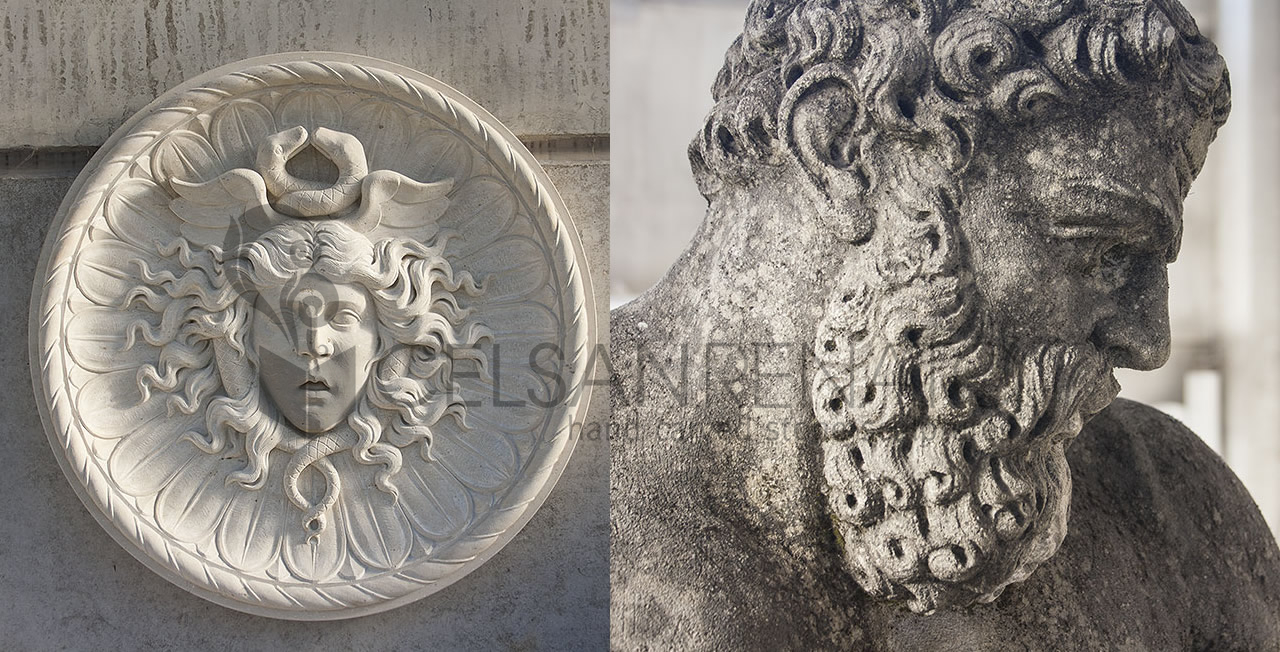
Stone sculptures can be divided into three main “families” corresponding to three different methods of working the material: bas-relief, which consists of obtaining a slight protrusion of the sculpted part from the background surface; high-relief, where the difference between the background and the sculpted part is greater; and sculpture in the round, where the work stands free in three-dimensional space.
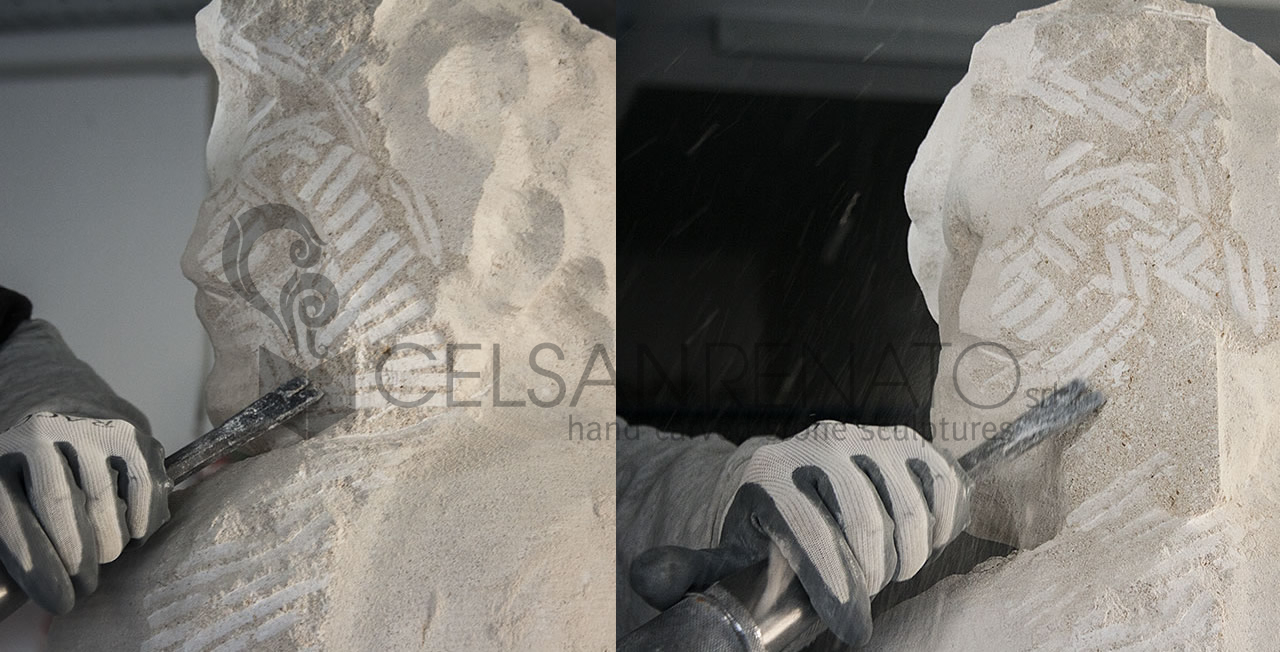
The classical method for creating a sculpture in the round involves the preparation of an initial sketch, a small-scale model. This is followed by the creation of a full-scale model, which serves as the basis for squaring the stone block from which the actual statue will emerge through various stages such as roughing, thinning, toothing, and modeling. The final part of this intensive production process consists of polishing and cleaning the sculpture.
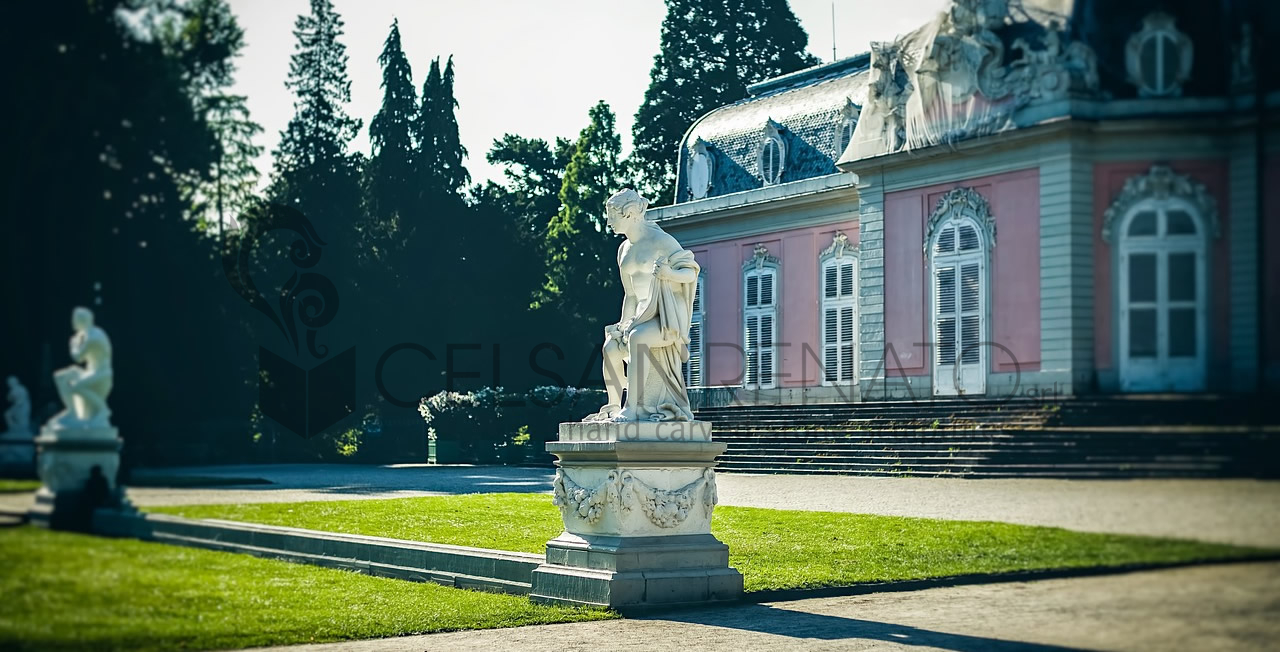
Present in large numbers since the mid-16th century in Italian gardens, sculptures have always found extensive use in outdoor furnishing. The scenic effect, combined with allegorical value, has rendered certain parks and gardens truly memorable.